
Friday, November 22, 2013
APOD 2.3

Friday, November 15, 2013
APOD 2.2

APOD 2.1

Thursday, October 24, 2013
APOD 1.5

APOD 1.4
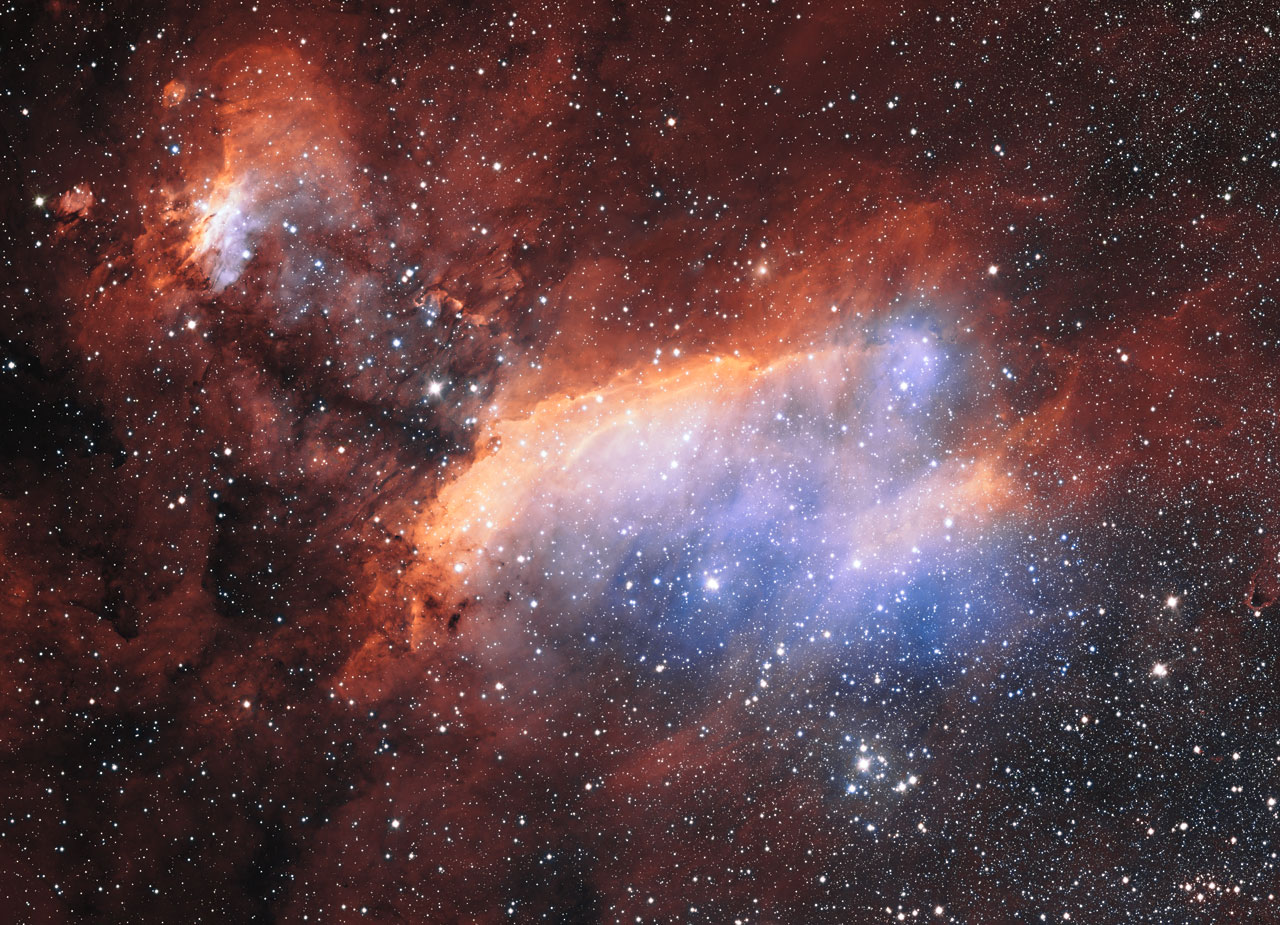
This image posted on September 23, 2013 shows the emission nebula just south of the star Antares - located in the constellation of Scorpio. Small stars near the nebula radiate heat which tears the electrons away from the atoms. The electrons eventually recombine with the atom to form light and give the nebula its glow. The nebula itself is said to be located approximately 6000 light-years away and 250 light-years across which would take up the same area as four full moons on the sky.
Biography of Johannes Regiomontanus
Jan Stary
PercivalAstronomy Honors / p. 5
24 Oct. 2013
Johannes
Regiomontanus
Johannes Regiomontanus, whose real name was Johann
Müller, was born on June 6, 1436, in Königsberg, Franconia (the modern day
state of Bavaria located in Germany). His changed name is derived from the
Italian name of his birthplace: Königsberg (meaning King’s Mountain). In Latin,
this is translated to “Regio monte” which helped derive the modern name
Regiomontanus. Regiomontanus’ contributions to astronomy were superb. He not
only helped improve observations recorded by his predecessors, but he also
introduced trigonometric methods to Europe and more.
Johannes Regiomontanus became known as a
mathematical and astronomical prodigy from an early age. He was homeschooled
until the age of eleven when he had enrolled into the University of Leipzig to
study mostly dialectics. Soon after, he had made his way into the University of
Vienna where we had become a pupil of Georg von Peuerbach, a
mathematician-astronomer, and soon his mentor. The university appealed to him
with its activity in mathematical astronomy and cosmology, and its reputation
with Peuerbach. Regiomontanus continued his education at the University of
Vienne where he had received his baccalaureate in 1452 but did not receive his
Master’s Degree until 1457 because the university required him to be at least
21 years of age. The two men had done work together for the remainder of
Peuerbach’s life. Peuerbach had pointed out many inaccuracies in the Alphonsine
Tables which in the mid-fifteenth century were in need for revision while also
pointing out the need for better translations of Greek texts.
Before the death of Peuerbach in 1461, he
[Peuerbach] was approached, in 1460, by the papel legate to the Holy Roman
Empire, Cardinal Bessarion, who had requested that Peuerbach write an
abridgement of Almagest. This piece,
written around 150 A.D. by Ptolemy, was arguably the most important
astronomical contribution up to that date. The two men had begun work on it but
soon Peuerbach had passed away with his dying wish being that Johannes
Regiomontanus completes the abridgment.
Regiomontanus agrees and moves to Italy as a member of Bessarion’s
extended household. There he completes the abridgment and calls it Epitome. This piece of astronomic
contribution contains updated information in several areas of mathematical
astronomy including the position of Mars which was 2º from its predicted
position. In addition to information on Mars, the times predicted in the tables
about the time an eclipse of the moon would occur happened to be one hour
earlier than its actual occurrence.
In Regiomontanus’ later life, he had also written a
piece called De triangulis omnimodus
which had developed the earliest statements of the law of cosine for spherical
triangles and provided tables of tangent values primarily for astronomical
work. The book did not appear until 1533 (67 years after his death). Johannes Regiomontanus
passed away in July 6, 1476, most likely due to the plague caused by the Tiber
River overflowing its banks.
Sources
Shank, Michael. "Regiomontanus (German Mathematician)." Encyclopedia
Britannica Online.
Encyclopedia Britannica, n.d. Web.
O'Connor, J. J., and E. F. Robertson. "Johann Müller
Regiomontanus." Regiomontanus Biography.
MacTutor History of Mathematics, June 2004. Web.
Norton, Stephen D. "Johannes Regiomontanus." Science and Its
Times. Ed. Neil Schlager and Josh
Lauer. Vol. 3: 1450 to 1699. Detroit: Gale, 2001. 380-81.
Gale Virtual Reference Library. Web.
Friday, October 11, 2013
APOD 1.3
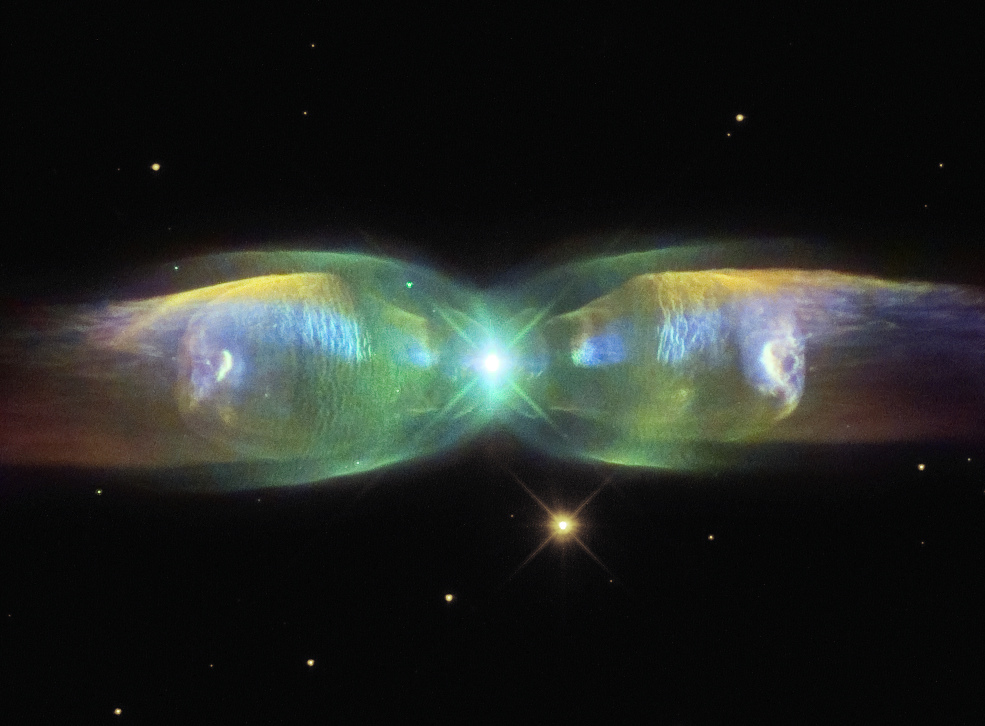
Posted on September 15, 2013, this picture displays a magnificent plethora of colors produced from the death of the star. As the star "dies" and transforms into a white dwarf star (a process that takes over a thousand years) it releases outer gaseous envelopes which forms to artistic display shown in the picture. What is also interesting is that there are two stars in the middle orbiting each other with an orbit ten times the size of Pluto's.
Friday, September 13, 2013
APOD 1.2

Friday, September 6, 2013
APOD 1.1
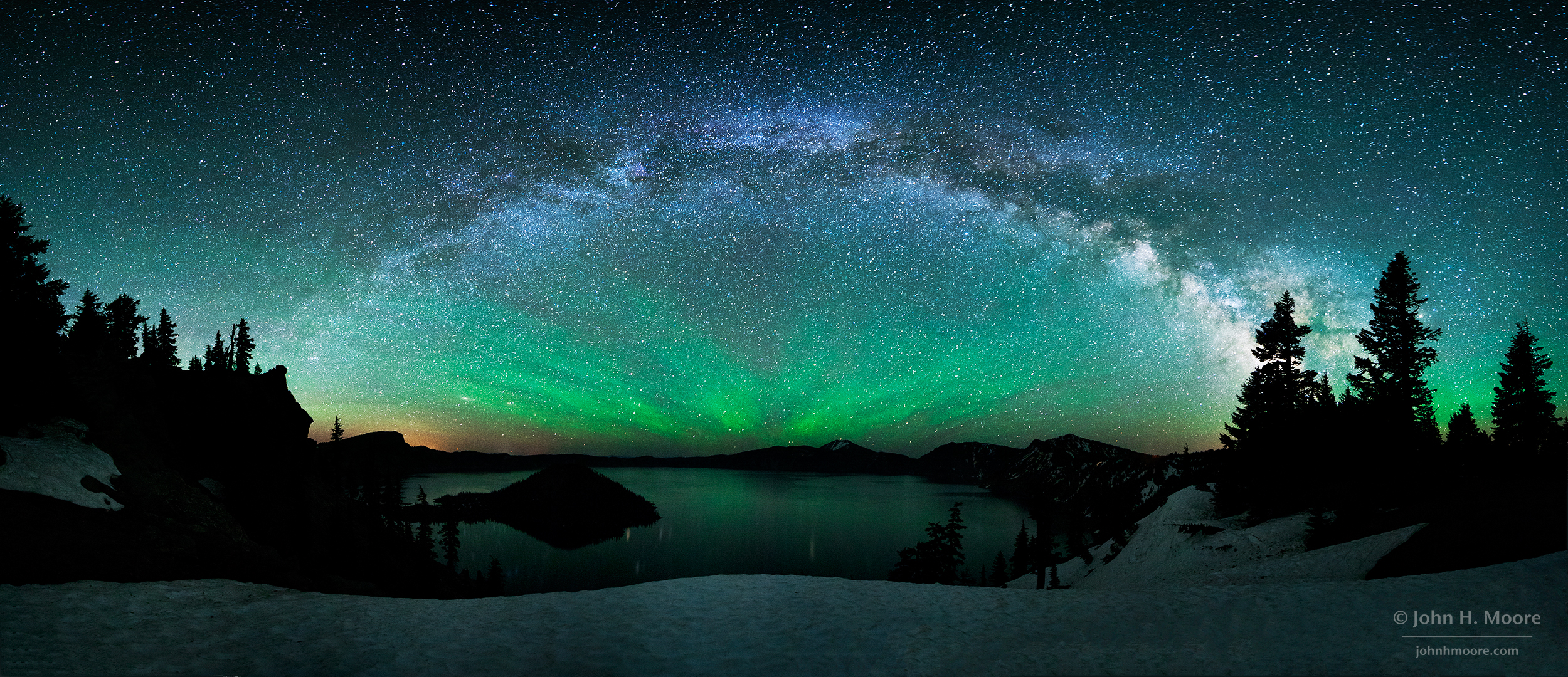
This picture taken on June 19, 2013 shows the bright arch of the Milky Galaxy over Crater Lake in Oregon. The green-ish glow in the background is caused by the light emitting atoms in Earth's atmosphere as they merge at night after being separated during the day from the energy emitted by sunlight. From the blue hue, to green, and then to the orange of the setting sun, its interesting to see how light behaves and the different colors that can be see through the interaction of light emitting atoms and the atmosphere.
Subscribe to:
Comments (Atom)