Friday, January 17, 2014
Observation post 2.2
For the past few nights the sky has been very clear and the moon has been so big and visible. In the mornings before school around 6:50 and at night time from around 6-10 ive been looking at the sky viewing the moon. It's very bright for now, even though the sky has often been foggy. Jupiter right now is also the biggest and brightest object in the sky. It was very easy to identify. Venus was visible at times in early January, but not anymore

Observation post 2.1
On New Years day, around 6-8 pm i watched the sky waiting for the comet ISON. this was a huge event for stargazers everywhere and it was really cool. it looked almost as if the comet passed and then was dragged along across the sky. it passed through the constellation of Hercules. the sky was also really clear that night and the moon was visible.
APOD 2.8
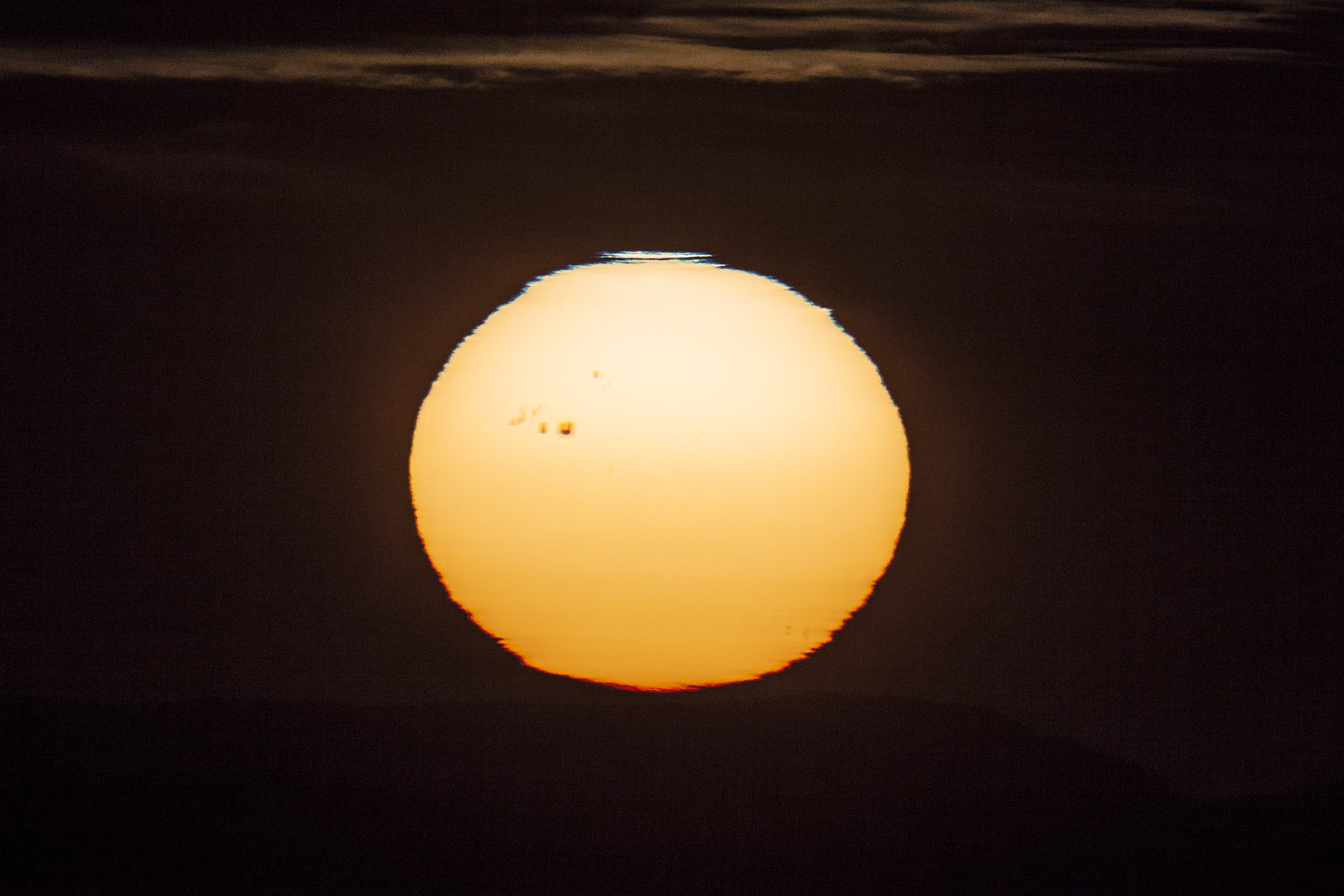
Sunspot at Sunset
Sunspots in the Sun appear very small and dainty when we are looking at them but they are in fact huge and can span miles. This particular sunspot was so large is could be viewed with the naked eye. This picture was taken from Swiss skies on January 5th. The sunspot showed an active region in which tornadoes or other storms could be occurring. On January 7th it produced a solar flare and a coronal mass ejection which then led to geomagnetic storms and an aurora on January 9th. Sunspots can also be very dense.
APOD 2.7
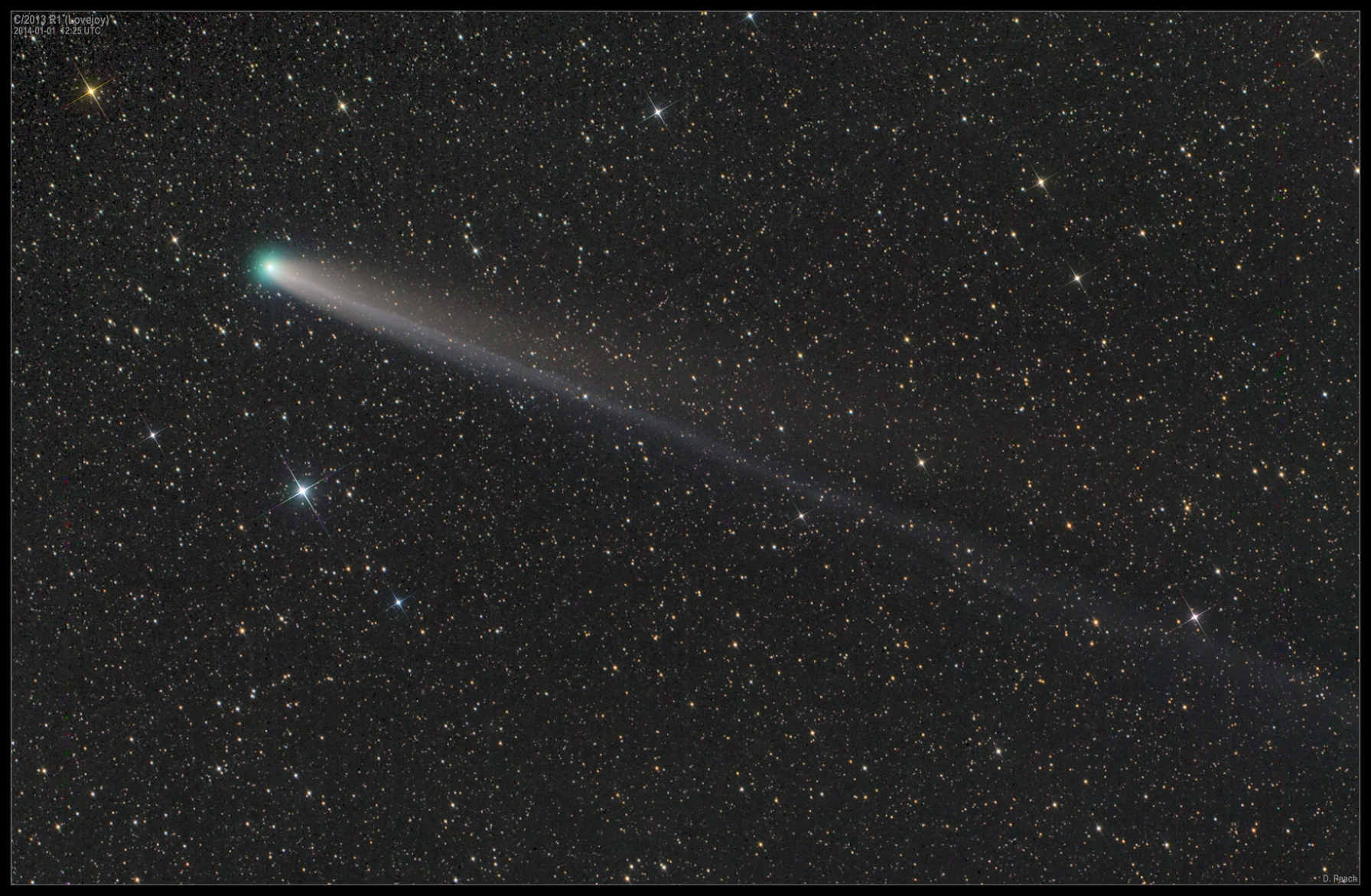
January 3rd 2014
This picture is really cool because it looks like a comet zooming across the sky and leaving a trail as it passes. The Comet ISON in 2013, also known as Comet Lovejoy, traveled across the early morning sky on New Year's Day. It stretched through the constellation of Hercules. It was only visible to the naked eye in very dark places right before dawn. The deep exposure made it a tinted green color. This was the thing for stargazers to view, definitely something they wouldn't want to miss. The Comet Lovejoy made its closest approach to the Sun around December 22.
APOD 2.6
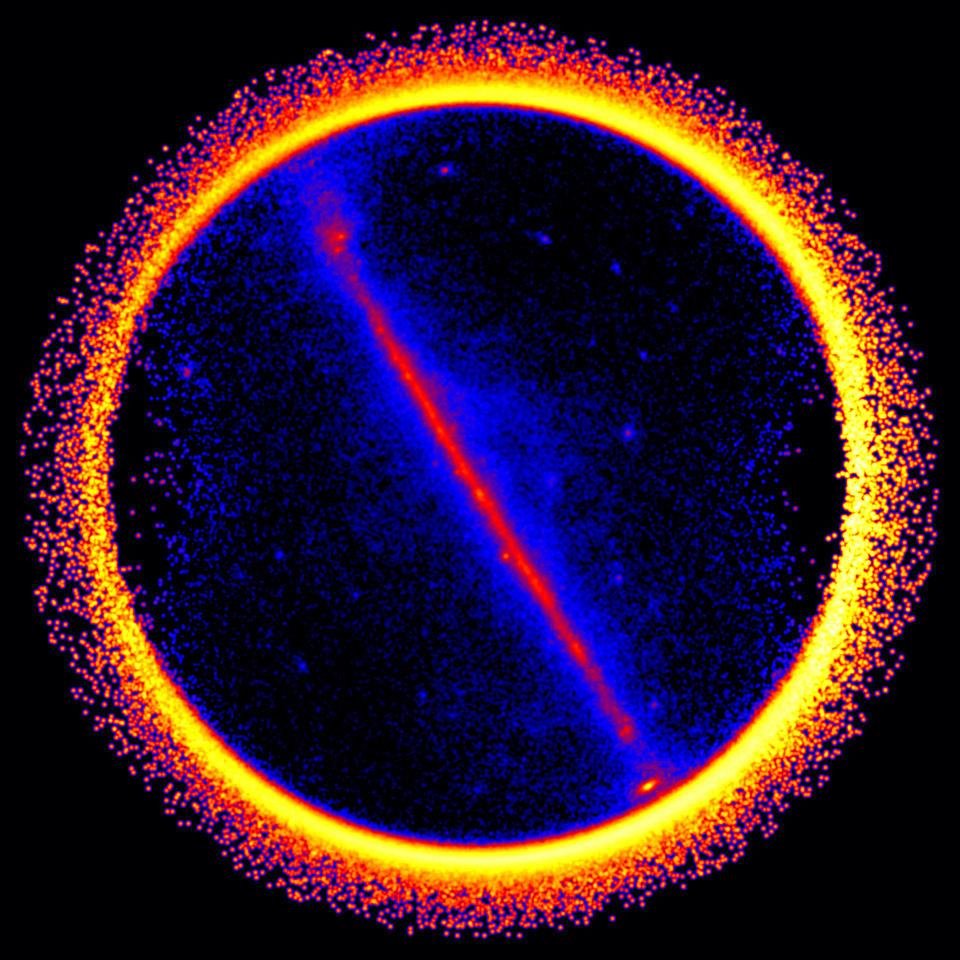
Gamma-Ray Earth and Sky
This picture is incredible because of the vivacious colors that are shown. Each color is lined in a way so that you can see where one color ends and the other begins. Earth is the brightest source of gamma rays, which is the most energetic form of light. Gamma-rays from Earth are produced when high energy particles, or cosmic rays, crash into Earth's atmosphere. Our ozone layer blocks that harmful rays, but the gamma rays still dominate this picture of Earth and are present when viewed. The yellow color is the highest intensity of gamma rays.
APOD 2.5
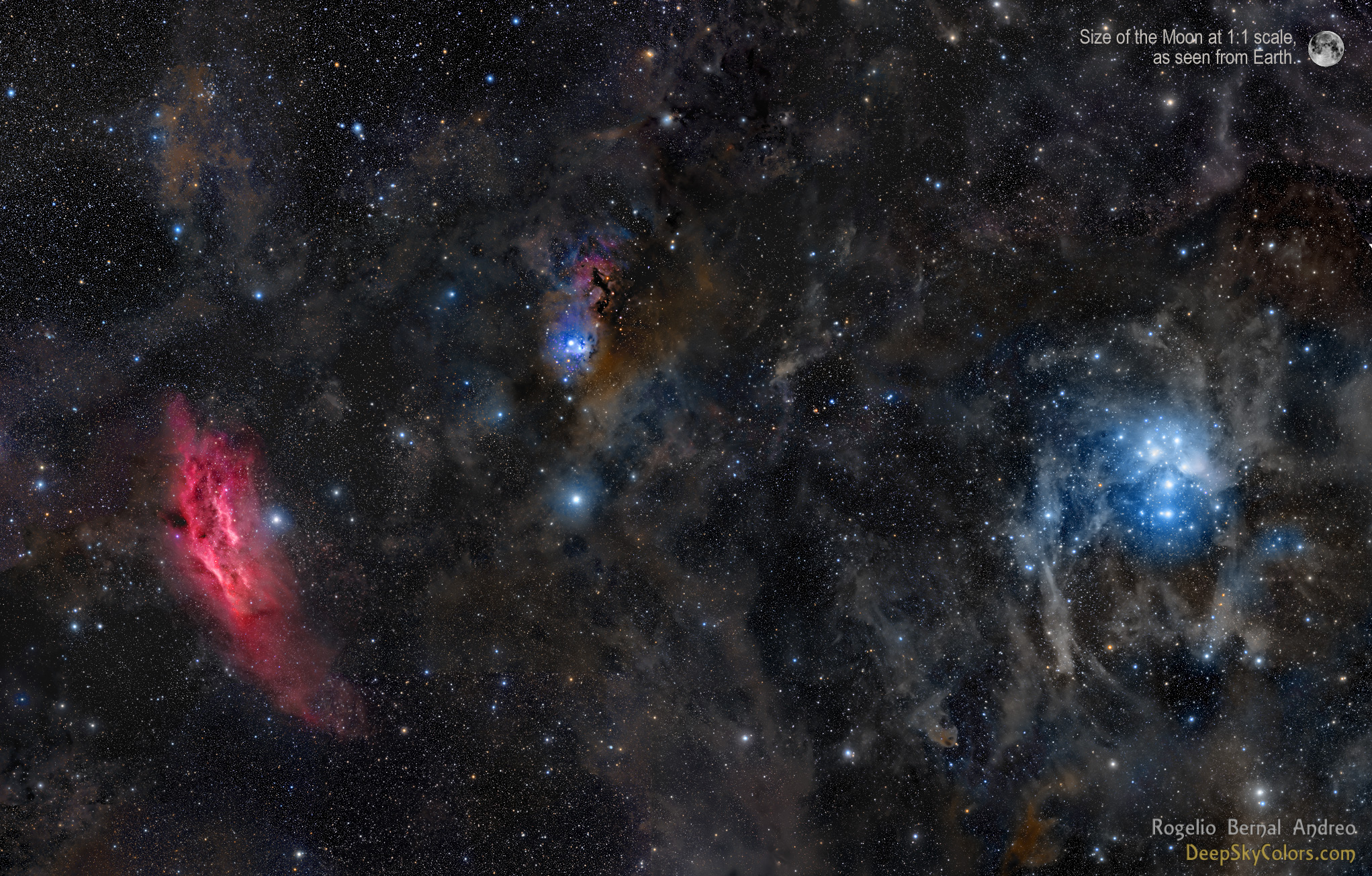
From California to the Pleiades
A trip from the California Nebula to the Pleiades star cluster would cover just 12 degrees across planet Earth's night sky. These 12 degrees are equal to the extent of 25 full moons. This trip also takes place next to the two constellations of Perseus, the Hero, and Taurus, the Bull. The California Nebula is also known as NGC 1499 and it's over 60 light-years long. The Pleiades star cluster is over 400 light-years away and spans across 15 light-years. The dark dusty space, where we cant see the individual colors, is known as the Perseus molecular cloud.
APOD 2.4
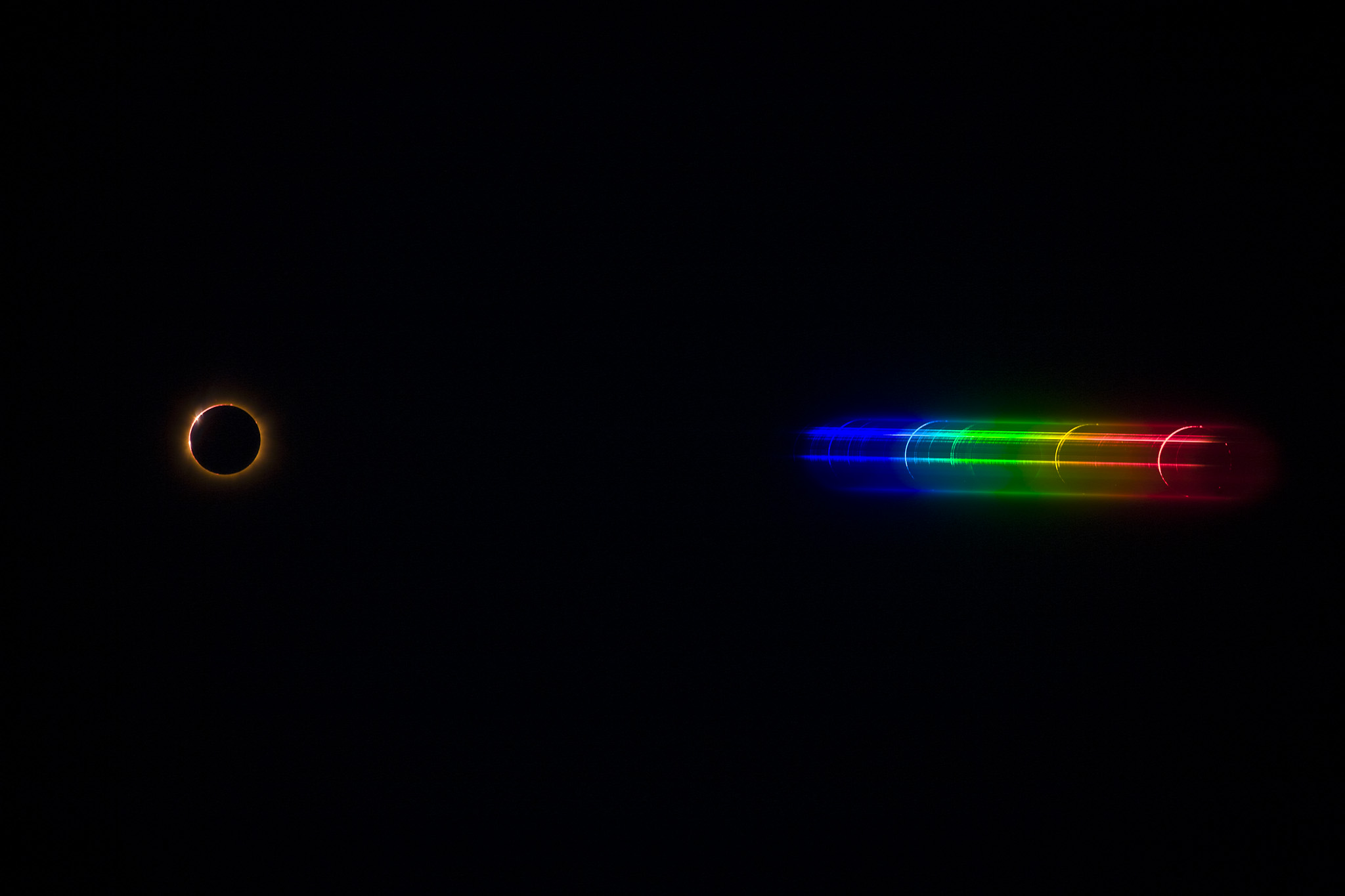
The flash spectrum of the sun
In a split second of time, the visible spectrum of the sun changed from absorption to emission on November 3rd, due to the brief total phase of a solar eclipse. This moment of different colors was captured by a telephoto lens and from a place in Africa called Gabon. With a large amount of light from the Sun blocked by the moon, the normally able to be viewed absorption spectrum is hidden. The brightest emissions and lines are due to the presence of Hydrogen that produces red beta to the right and blue beta to the left.
Friday, January 10, 2014
John Herschel Biography
John Herschel – in full Sir John Frederick William Herschel – was born on March 7, 1792 in Slough Buckinghamshire, England. He was the most acclaimed scientist in England from 1830 to about 1860. Like his father, William Herschel, John Herschel studied astronomy. Herschel is best known for ushering in the use of the Julian Day system in astronomy. He also named 4 of Uranus’ moons and 7 of Saturn’s.
Herschel grew up as an only child and attended Eton College at Cambridge University. During his time there, he and some fellow colleagues founded the Analytic Society whose purpose was to introduce mathematical theory into English universities. In 1812, he submitted his first mathematical paper On a remarkable application of Cotes’s Theorem in the Transactions of the Royal Society to the Royal Society. He was elected fellow of the Royal Society the following year. Herschel began to study for the bar in London but soon changed his mind and discontinued his studies at Cambridge University in 1815 when he becomes ill. However, soon after, he returns to the university as a mathematics teacher. His mathematical studies continue into the 1820’s and he is awarded the Copley Medal by the Royal Society in 1921. Soon after, he changes direction and begins to work more in the astronomical area where part of his motivation to begin work in astronomy was the fact that there was no one to continue the work of his father. In 1820, Herschel is involved in the founding on the Astronomical Society and is named vice-president. John Herschel’s first major task in astronomy was the observation of the double stars cataloged by his father. The movements of these pairs of stars about each other offered the best hope of investigating the gravitational forces operating in the universe. The catalog that he had compiled between 1821 and 1823 and published in the Philosophical Transactions in 1824 earned him the Gold Medal of the Royal Astronomical Society. John Herschel’s sense of accountability to complete his father’s work in astronomy led him to go on a trip to the Southern Hemisphere to survey the skies not visible in England. The bulk of his time was occupied with the Results of Astronomical Observations, Made During the Years 1834–38 at the Cape of Good Hope. This work contains catalogs and charts of southern-sky nebulae and star clusters, a catalog of the relative positions and magnitudes of southern double stars, and his observations on the variations and relative brightness of the stars. Another contribution that Herschel has made to astronomy is the invention of the actinometer in 1825. This device measured the intensity of the sun’s rays. Herschel’s later years were devoted largely to updating previous publications. On May 11, 1871, Herschel died at his home in Collingwood near Hawkhurst in Kent.
Works Cited:
Davidson, Michael W. "Molecular Expressions:Science, Optics and You - Timeline - John Herschel."
1 Aug. 2003. Web.
"Sir John Herschel, 1st Baronet (English Astronomer)." Encyclopedia Britannica Online. Encyclopedia Britannica, 20 Mar. 2012. Web.
"John Frederick William herschel - Biography." John Frederick William Herschel. The Europena
Graduate School. Web.
Subscribe to:
Comments (Atom)